Want to stay in your New Jersey home as you age — without the bathroom becoming a liability?
You’re not alone. According to AARP, 77% of adults 50+ want to remain in their current home as they age. But here’s the uncomfortable truth: the bathroom is statistically the most dangerous room in any NJ home for adults over 65. The CDC reports that falls are the leading cause of injury-related death for adults 65+ — and most of those falls happen in the bathroom.
The good news? A well-designed aging-in-place bathroom remodel eliminates 90% of those risks while looking nothing like a hospital. Done right, you won’t even notice the safety features — but they’ll be there when you need them.
Here’s what you’ll learn in this 2026 NJ aging-in-place bathroom guide:
- Real costs for NJ aging-in-place bathroom remodels — from basic safety upgrades to luxury accessible master suites
- 12 essential aging-in-place bathroom features (and why generic ones look terrible)
- How to make accessibility design beautiful — not clinical
- NJ-specific grants, financing, and tax benefits most homeowners miss
- Universal design principles that work for every age, ability, and visitor
- Real answers to the 6 most-asked NJ aging-in-place bathroom questions
Let’s design the bathroom that lets you stay in the home you love.
Aging-in-Place Bathroom Remodel NJ — The Quick Answer
In 2026, an aging-in-place bathroom remodel in New Jersey typically costs between $18,000 and $55,000 depending on scope. A basic accessibility retrofit (grab bars, comfort-height toilet, walk-in shower conversion) starts around $18,000. A full aging-in-place master bath rebuild with curbless shower, heated floors, and integrated safety features typically runs $35,000 to $55,000 in NJ. Some features qualify for NJ tax deductions and HMFA financing programs.
| Bottom line: Adding aging-in-place features during a planned remodel costs 30-50% less than retrofitting them later as emergency modifications. The smartest time to design for the next 30 years is right now. |
Why NJ Homeowners Are Renovating for Aging-in-Place in 2026
The numbers tell the story:
- 77% of adults 50+ want to age in place (AARP) — they prefer their own home over assisted living, full stop.
- Falls are the #1 cause of injury death for adults 65+ (CDC) — and most happen in the bathroom.
- Adding grab bars and non-slip surfaces reduces fall risk by 50% (CDC) — these aren’t optional features. They save lives.
- 68% of bathroom renovations now include at least one accessibility feature — this is mainstream design now, not specialty.
- Reactive renovations cost 30–50% more than planned ones — waiting until after a fall to renovate is the expensive option.
In NJ specifically, demand is concentrated in counties with aging populations: Morris, Somerset, Bergen, and Union. But the smartest homeowners aren’t just retirees — they’re 55-year-olds renovating once, well, for the next 30 years.
NJ Aging-in-Place Bathroom Remodel Cost (2026)
Aging-in-place bathroom remodels in NJ vary widely in cost based on scope. Here’s what to expect:
| Project Scope | NJ Cost Range | Best For |
| Basic Safety Retrofit | $3,500–$8,500 | Existing bathroom needing grab bars, non-slip flooring, comfort toilet |
| Tub-to-Shower Conversion (Accessible) | $12,000–$22,000 | Replacing unused tub with curbless walk-in shower |
| Partial Aging-in-Place Remodel | $18,000–$32,000 | Major safety features + cosmetic update |
| Full Accessible Bathroom Rebuild | $32,000–$55,000 | Curbless shower, comfort fixtures, full design integration |
| Luxury Accessible Master Suite | $55,000–$95,000+ | Custom design-build with premium materials + full accessibility |
Two cost insights specific to NJ aging-in-place renovations:
- Pre-1980 NJ homes may need plumbing or electrical upgrades during demolition that add $2,000–$5,000 to the budget. This is common in older Bergen, Essex, and Union County homes.
- NJ permits range from $400–$900 for a typical aging-in-place remodel. As licensed contractors, we handle all permits and inspections.
| Plan Your NJ Aging-in-Place Bathroom Free in-home consultation — we visit, assess, and design with your future in mind. 📞 (800) 714-6949 | thepowderroomguys.com → Get Your Free Bathroom Estimate |
12 Essential Aging-in-Place Bathroom Features for NJ Homes
These are the features that matter — done right, they’re invisible until you need them:
1. Curbless Walk-In Shower
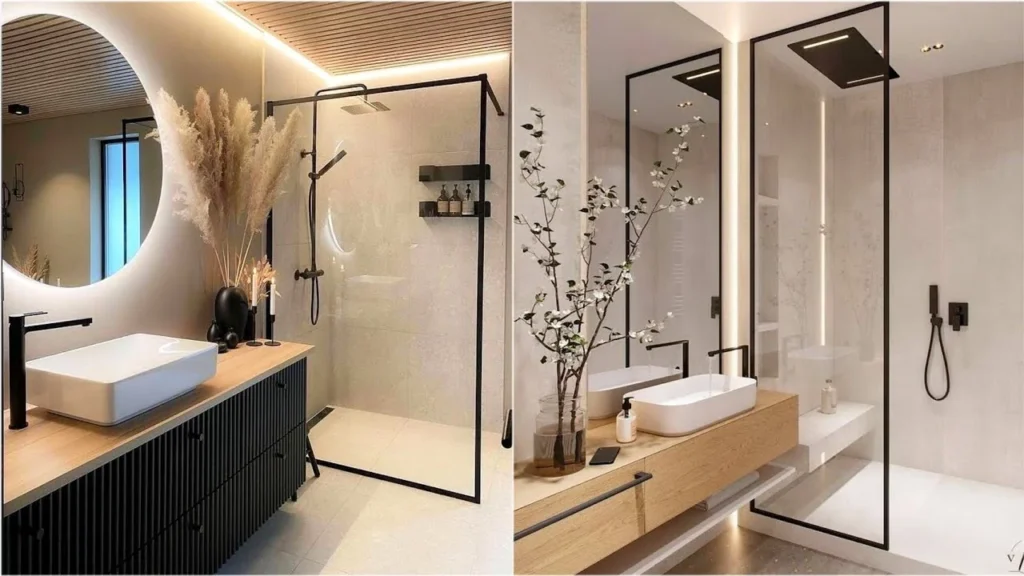
The single most important aging-in-place feature. No step-over barrier means no tripping hazard. Curbless showers also look stunningly modern — they’ve fully crossed over from accessibility-only to standard luxury expectation in NJ master bathrooms. In our recent Bergen and Union County projects, curbless showers appear in over 70% of master bath renovations regardless of homeowner age.
2. Linear Floor Drain
Pairs with the curbless shower. A long, low-profile linear drain (instead of a center round drain) lets the floor slope subtly toward the wall — the eye doesn’t catch it, but water still flows perfectly. Looks designer. Functions accessibility-first.
3. Built-In Shower Bench (Tile or Teak)
Useful for shaving legs at any age. Essential for safety and comfort as mobility changes. Built-in tile benches age better than fold-down teak — though both have their place. Position the bench to allow grab bar access from a seated position.
4. Grab Bars (Designed-In, Not Bolted-On)
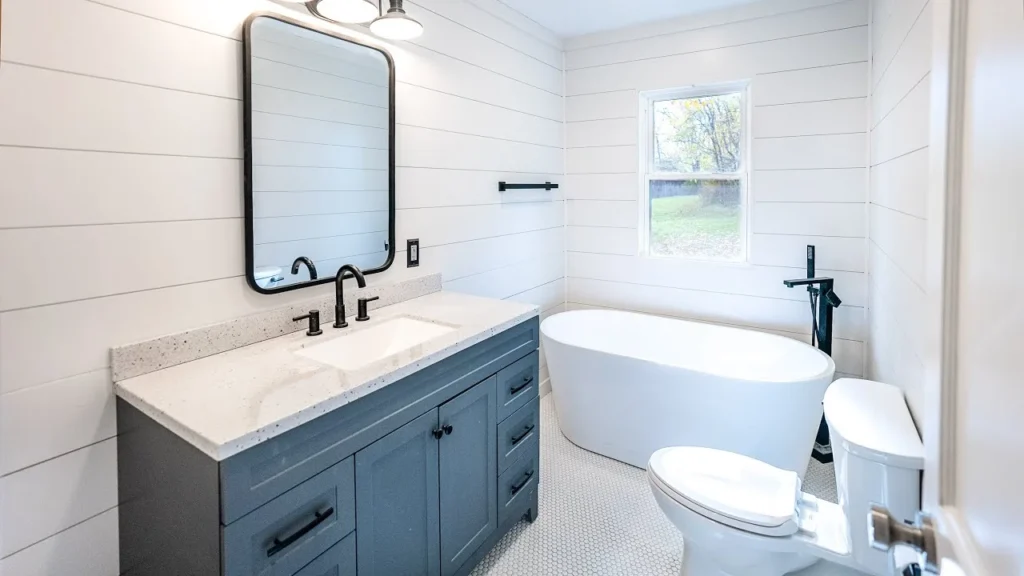
The clinical-looking stainless steel grab bars from a hospital supply store don’t belong in your beautiful new bathroom. Modern integrated grab bars come in matte black, brushed brass, oil-rubbed bronze, and brushed nickel — they look like designer towel bars, but they hold 250+ pounds of weight. We install them with structural blocking behind the wall during renovation, so they’re rated for actual safety use, not decorative.
5. Comfort-Height Toilet
Standard toilets sit 15 inches off the floor. Comfort-height toilets sit 17–19 inches — much easier on knees, hips, and backs. Look identical to standard models from across the room. Cost difference is $50–$150.
6. Lever-Handle Faucets (Not Round Knobs)
Lever handles can be operated with a closed fist, a forearm, or weakened grip strength. Round knobs require fine motor control that arthritis takes away. Single-lever faucets — sleek, modern, and universally easier to use — are the new standard.
7. Hand-Held Shower Wand on Slide Bar
Adjustable height for seated bathing, easier rinse for limited mobility, and useful for cleaning the shower itself. Pair with a fixed rainfall head for the best of both worlds.
8. Non-Slip Flooring (DCOF Rated 0.42+)
Modern matte-finish porcelain tile rated DCOF (Dynamic Coefficient of Friction) 0.42 or higher provides genuine slip resistance when wet without looking like commercial flooring. Avoid polished tiles in any wet area, regardless of how beautiful — they’re a known fall hazard.
9. Heated Floors
Beyond comfort, heated floors prevent the temperature shock that contributes to falls in older adults. Cold tile causes muscle tension, slower movement, and balance issues. Warm floors keep the body relaxed and steady. NJ winters make this even more valuable.
10. Strategic LED Lighting
Three lighting layers eliminate shadows and depth-perception risks: (1) ambient overhead, (2) task lighting at the vanity (motion-sensor LEDs are excellent), and (3) night lighting near the floor (motion-activated nightlights at toe-kick height prevent middle-of-night falls). All on dimmer switches for adaptable use.
11. Wider Doorway (Minimum 32 Inches Clear)
A 32-inch clear opening accommodates walkers, wheelchairs, or someone helping a partner. Pocket doors save floor space and eliminate door-swing hazards. Barn-style sliding doors are aesthetically forward and equally practical. Standard 28-inch interior doors create future regret.
12. Structural Blocking Behind Walls
Even if you don’t install grab bars now, install plywood blocking behind the drywall during renovation. It costs almost nothing during a remodel ($150–$300). Adding blocking later requires opening walls — adding $1,500–$3,000 to the cost. This is the smartest single thing you can do for future flexibility.
Universal Design — Beauty + Accessibility Together
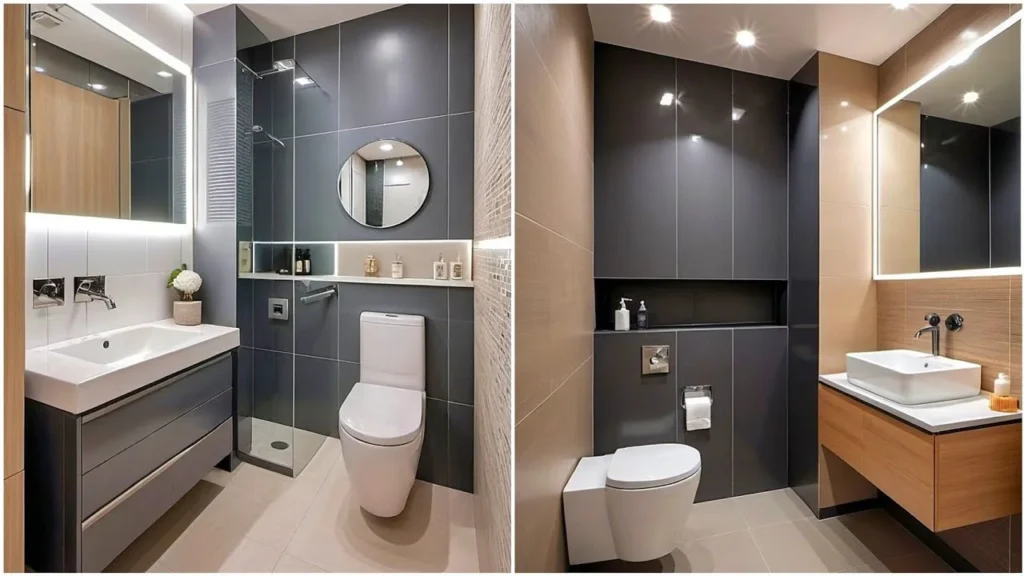
The biggest myth in aging-in-place bathroom renovation: it has to look medical or institutional. The truth in 2026: every aging-in-place feature can be beautifully designed.
Universal design principles:
- Features that benefit everyone — accessible bathrooms work better for kids, pregnant family members, anyone with a temporary injury, and visitors of any age.
- Invisible until used — grab bars look like towel bars; comfort toilets look standard; non-slip tile looks like designer matte tile.
- Better daily living — heated floors, hand-held showers, lever faucets, and walk-in showers are improvements at any age.
- Forever-home value — homes with universal design features sell faster in NJ markets where a significant portion of buyers are 50+.
In our NJ projects, the homeowner often forgets the bathroom was designed with accessibility in mind — until a visiting parent comments on how easy it is to use. That’s universal design done right.
NJ-Specific Grants, Financing & Tax Benefits
Most NJ homeowners completely overlook financial programs that can offset the cost of accessibility renovations:
NJ Housing and Mortgage Finance Agency (HMFA)
The NJHMFA offers renovation-specific financing products for qualified NJ homeowners — including some specifically for accessibility modifications. Programs change annually, so visit njhousing.gov for current options.
Home Equity Line of Credit (HELOC)
North NJ property values remain strong in 2026, and most homeowners have significant equity. HELOCs offer flexible access to renovation funds at relatively low rates — typically prime + 0–2%. Best for projects you’ll complete in stages.
Federal Medical Expense Tax Deduction
Some accessibility modifications — particularly grab bars, ramps, and walk-in showers prescribed by a physician — may qualify as deductible medical expenses on federal tax returns. Consult your tax advisor for your specific situation.
VA Disability Grants
Veterans with service-connected disabilities may qualify for Specially Adapted Housing (SAH) or Special Housing Adaptation (SHA) grants — up to $109,000+ for SAH grants — to make their NJ home accessible. Apply through the VA.
Long-Term Care Insurance
Some long-term care insurance policies cover home modifications that allow the policyholder to remain at home rather than requiring facility care. Check your policy’s home modification benefits.
Personal Renovation Loans
Unsecured personal loans from lenders like LightStream, SoFi, or Marcus offer 6–15% APR for renovation purposes. Quick approval, no collateral required, fixed monthly payments — useful for $15,000–$50,000 projects.
When to Plan Your NJ Aging-in-Place Bathroom Remodel
There are three smart times to plan an aging-in-place bathroom remodel in NJ:
Best Time #1: When You’re 55–65
Plenty of working years to enjoy the upgrade. Health is still strong (no urgent retrofitting). Project can be planned thoughtfully without time pressure. You’ll likely sell at some point, and accessible bathrooms add resale value.
Best Time #2: When the Bathroom Already Needs Renovation
If you’re renovating anyway — even at age 40 — adding aging-in-place features costs almost nothing extra during the project. Structural blocking, comfort toilets, and lever faucets add minimal cost. You’re future-proofing without sacrificing budget.
Best Time #3: After a Family Event
A parent moving in. A grandparent visiting frequently. A spouse recovering from surgery. These events make accessibility immediate — not future-proofing, but present-living. Renovations driven by family needs often produce the most thoughtfully designed bathrooms.
The Worst Time: After a Fall
This is the worst case scenario — and unfortunately, it’s how most accessibility renovations happen. Emergency renovations cost 30–50% more, are scoped under stress, often skip thoughtful design, and don’t capture the universal design opportunity that comes with planned projects.
How to Hire a Qualified NJ Aging-in-Place Bathroom Contractor
Five questions to ask any NJ contractor before committing:
- Are you fully licensed and insured in New Jersey? Verify the license number on the NJ Division of Consumer Affairs website.
- Have you completed aging-in-place projects in NJ? Ask for references and photos from completed projects in homes similar to yours.
- Will you install structural blocking behind walls for current and future grab bars? The right answer is yes, automatically.
- How do you balance accessibility features with design aesthetics? Listen for whether they understand universal design or treat accessibility as a cost-center constraint.
- What warranty do you provide on labor? Industry standard is 1 year. Quality contractors offer 3 years or more — important for a renovation you plan to use for the next 30 years.
If a contractor’s bid comes in dramatically lower than competing quotes, that’s a red flag — not a deal. Aging-in-place renovations require materials and structural work that quality contractors don’t compromise on.
NJ Aging-in-Place Bathroom Remodel — Frequently Asked Questions
What is the average cost of an aging-in-place bathroom remodel in NJ?
An aging-in-place bathroom remodel in New Jersey typically costs $18,000–$55,000 in 2026, depending on scope. Basic accessibility retrofits start around $3,500. Tub-to-shower conversions with accessibility features run $12,000–$22,000. Full aging-in-place rebuilds with curbless showers, comfort fixtures, and integrated safety features run $32,000–$55,000.
Will an aging-in-place bathroom remodel hurt my home’s resale value?
No — the opposite. A well-designed aging-in-place bathroom remodel uses universal design principles that look beautiful to all buyers, not just older ones. With 50+ buyers representing the majority of NJ home purchases in many markets, accessible bathrooms increasingly add resale value rather than detract from it. The key is thoughtful design that doesn’t look clinical.
Do I need a permit for an aging-in-place bathroom remodel in NJ?
Yes. NJ Uniform Construction Code requires permits for any bathroom renovation involving plumbing, electrical, or structural changes. Permit fees range from $400–$900 by township. Licensed NJ contractors handle all permit applications and inspection scheduling on your behalf.
Can I get tax deductions for aging-in-place bathroom modifications?
Some accessibility modifications may qualify as deductible medical expenses on federal tax returns — particularly when prescribed by a physician for a specific medical condition. Eligible items can include grab bars, walk-in showers, and ramps. Consult your tax advisor for your specific situation. NJ may also have state-level programs through HMFA worth exploring.
How long does an aging-in-place bathroom remodel take in NJ?
A basic accessibility retrofit takes 1–2 weeks. A tub-to-shower conversion with accessibility features takes 2–3 weeks. A full aging-in-place bathroom remodel typically takes 3–5 weeks. Custom design-build accessible master suites can take 6–8 weeks. We provide a specific written timeline during your free consultation.
Does Medicare or NJ Medicaid pay for aging-in-place bathroom modifications?
Standard Medicare typically does not cover home modifications. NJ Medicaid Home and Community-Based Services (HCBS) waivers may cover some accessibility modifications for qualifying individuals. Long-term care insurance policies sometimes cover home modifications. Check with NJ Department of Human Services and your specific insurance for coverage details.
Ready to Plan Your NJ Aging-in-Place Bathroom?
You now know exactly what an aging-in-place bathroom remodel involves — the costs, the features, the financial programs, and how to get it done beautifully without anything looking clinical. The next step is the easiest one: get a free, no-obligation in-home consultation.
The Powder Room Guys specialize in NJ aging-in-place bathroom renovations. We design with universal principles, install structural blocking for current and future safety, and source materials that meet accessibility standards while looking absolutely stunning. Every project is fully licensed and insured, backed by our 3-year workmanship warranty across Bergen, Union, Essex, Morris, Passaic, and Somerset Counties.
Call (800) 714-6949 or visit thepowderroomguys.com to schedule. The first conversation is completely free — and the bathroom you build today is the bathroom that lets you stay in your home for the next 30 years.
| Get Your Free NJ Aging-in-Place Consultation Beautiful design. Universal accessibility. Built for the next 30 years. 📞 (800) 714-6949 | thepowderroomguys.com → Get Your Free Bathroom Estimate |